About The Jet Lag Calculator:
What is it?
Jet lag occurs when your body clock is out of sync with the environment. It causes health problems and reduced alertness (Olson, 2013).
Jet Lag Rooster shifts your body clock to reduce or prevent jet lag:
Does it work?
Yes.
Research shows that light exposure and melatonin at the right times can shift your body clock to reduce jet lag (Eastman & Burgess, 2009; Kolla & Auger, 2011). Jet Lag Rooster creates an individual plan suggesting the best times for bright light exposure (e.g., sunlight) and melatonin. People who follow these suggestions report less jet lag (Lieberman, 2003). Shifting your body clock before departing can sometimes prevent jet lag completely (Burgess et al., 2003).
Jet Lag Rooster is recommended by the Center for Disease Control (CDC Health Information for International Travel “Yellow Book”, 2016). For details on the science behind it, see an article in Scientific American (Olson, 2013).
Example Jet Lag Plan:
Preview:
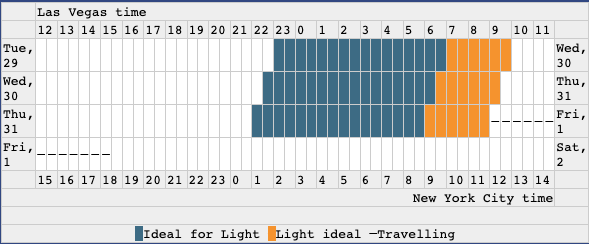
Plan:
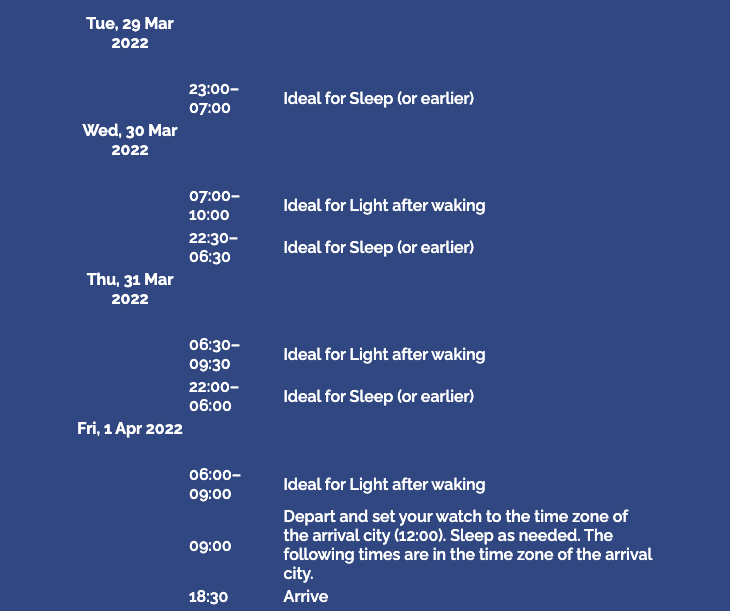
Guidelines:
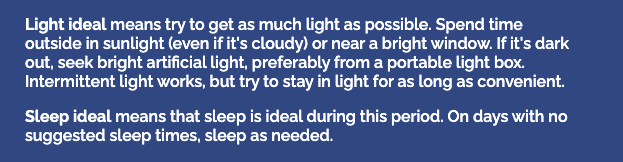
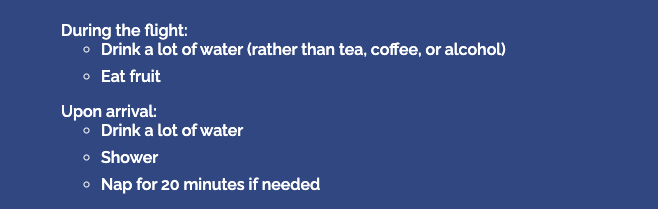
To Reduce Travel Fatigue:
Contact
This calculator is based on an algorithm created by Jay Olson, PhD. He first became interested in how to reduce jet lag after sleeping through the first week of afternoons on a Europe trip. He hasn’t been jet lagged since.
Jay also works with business travelers and elite athletes to give individual consultations before important trips.
Due to Jay’s extensive work on the jet lag calculator, Jet Lag Rooster is now part of the Sleepopolis family. Contact us at: info@sleepopolis.com